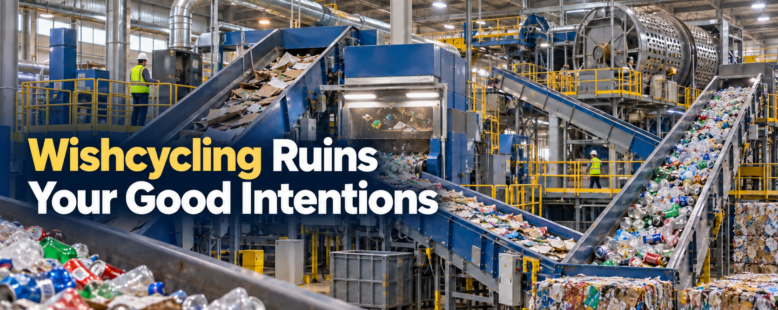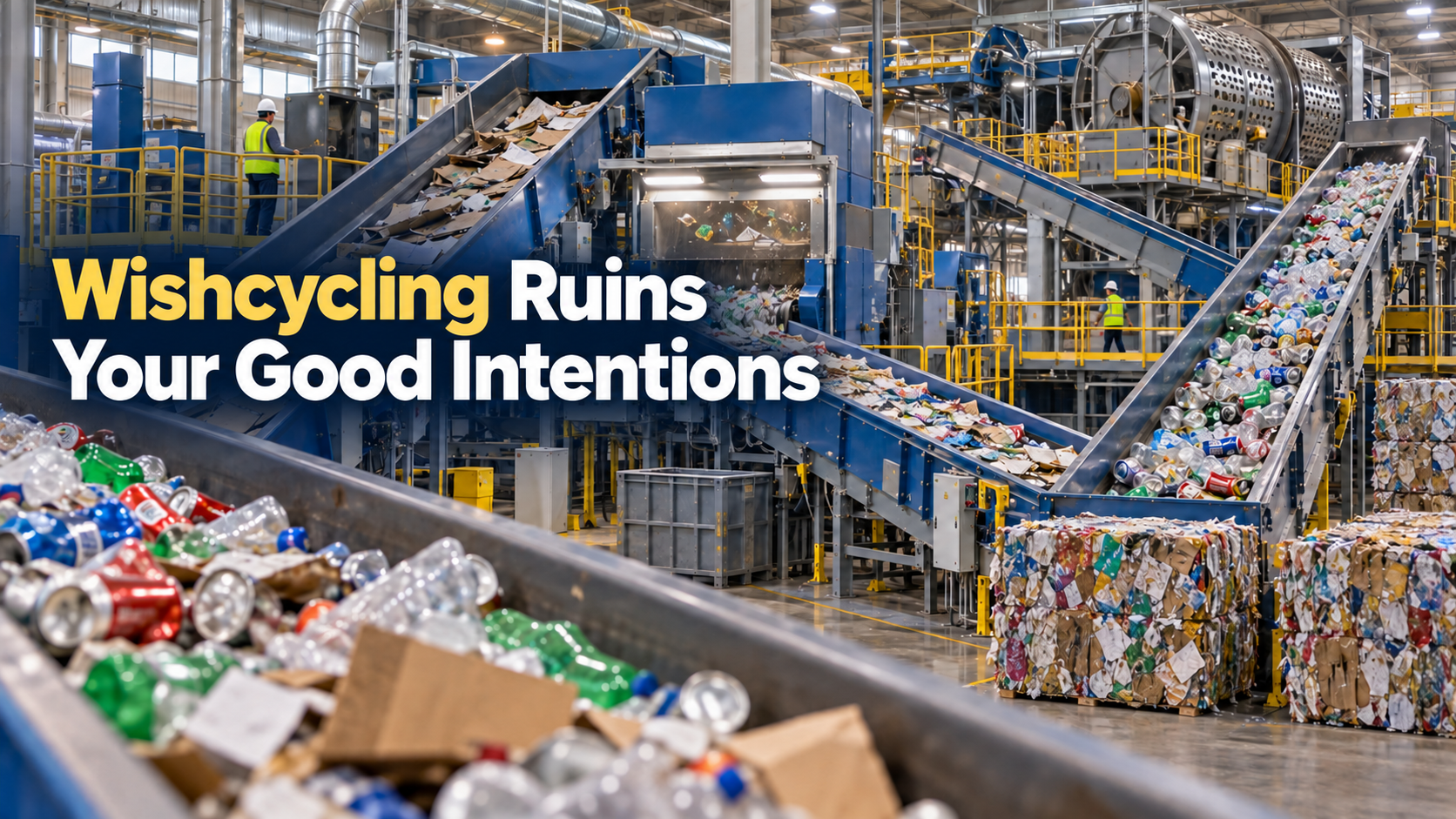
What if one wrong item in your bin could damage an entire recycling facility or even start a fire?
Inside a WM recycling facility in Salt Lake City, hundreds of tons of curbside recycling move through a remarkable maze of machines every day.
Workers first remove items that don’t belong, including plastic bags, batteries, car seats, and even basketballs.
Next, rubber forks on a conveyor separate cardboard, while optical sorters use light, color, and powerful bursts of air to send paper and plastics down different paths.
Magnets pull out steel cans. Eddy currents separate aluminum, creating a magnetic force that sends the cans into their own collection area.
The biggest lesson is simple: good intentions are not enough.
Putting questionable items into the bin is called “Wishcycling.” Instead of helping, these items can damage machinery, create dangerous conditions, contaminate recyclable materials, or end up in a landfill anyway.
Plastic bags can become tangled around rollers. Batteries can cause fires. Both should be taken to appropriate collection points instead of being placed in curbside bins. Always check your local recycling rules first.
Once everything is properly sorted, the paper, cardboard, plastics, steel, and aluminum are compressed into dense bales. These materials can then be sold and transformed into new boxes, bottles, cans, and other products.
Recycling works, but only when we put the right things in the right place.
Want to see the extraordinary machines behind the process? Watch the full video and follow your recycling’s journey.