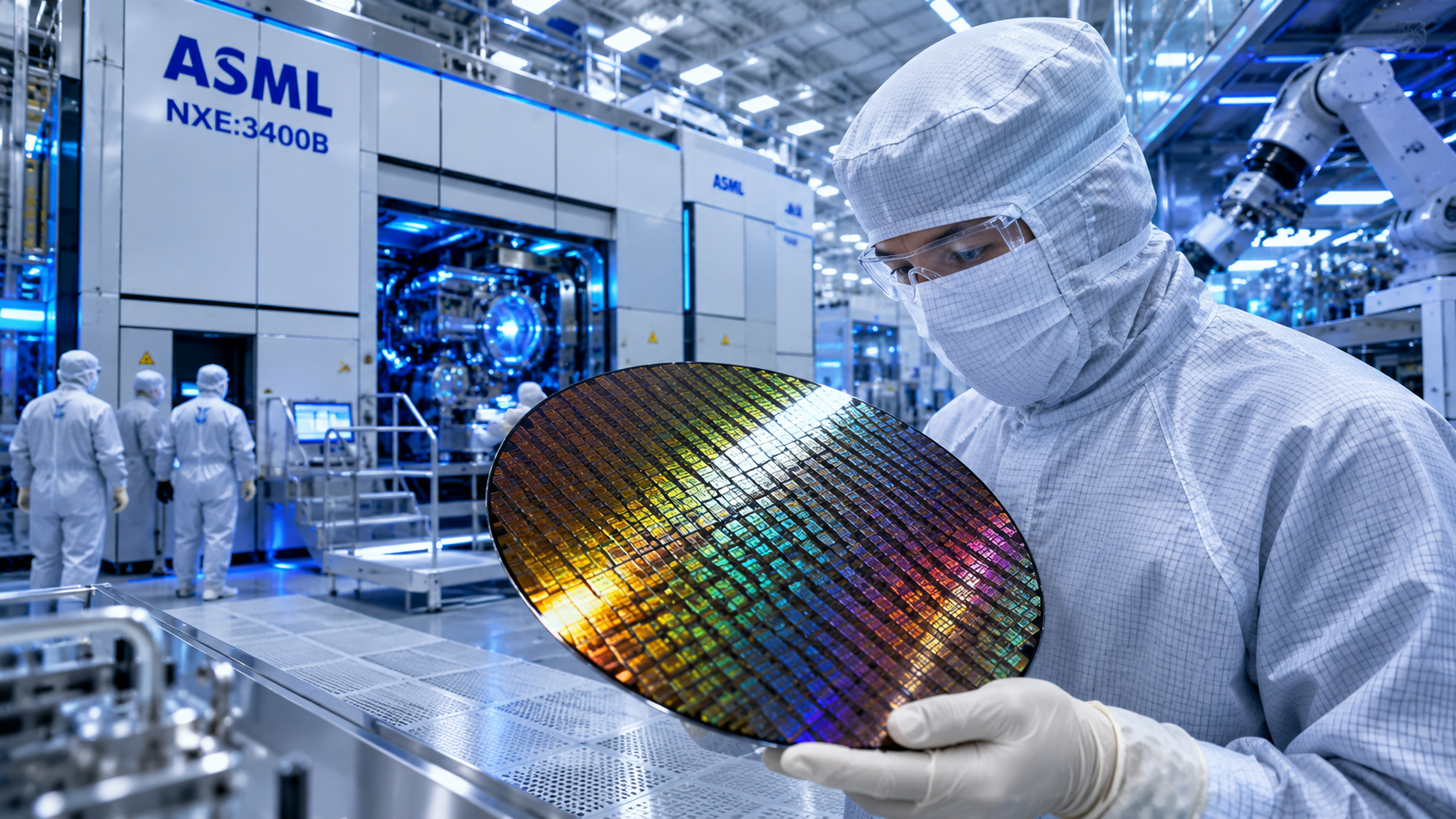
A single stray hair can destroy a chip worth half a million dollars. That’s not a metaphor. It’s Tuesday inside Intel’s Oregon fab.
We got rare access to one of the most heavily guarded factories on Earth, the kind of place where no media has ever been allowed past certain doors. The rooms are 1,000 times cleaner than a hospital operating room. Workers wear full bunny suits, double gloves, and booties. Even a sneeze gets sucked out of the air in under a minute.
Inside, silicon wafers get transformed into the chips running everything from your phone to fighter jets to AI data centers. The process takes about three months, roughly 2,000 steps, and zero human hands. One mistake and a single wafer, worth up to $500,000, gets thrown away.
The machines that make this possible are almost unbelievable. One tool, from a single Dutch company called ASML, costs up to $400 million. Just walking through one hallway, you’re looking at over a billion dollars in equipment.
But this isn’t just a story about extreme manufacturing. It’s about a geopolitical gamble. Around 90% of the world’s most advanced chips are made in Taiwan. If tensions with China ever cut off that supply, the US could lose access almost overnight. That’s exactly why Washington is betting big on Intel, pumping in billions and taking a real ownership stake to rebuild chipmaking on American soil.
The catch? Building a fab in the US costs more, running it costs more, and Intel is racing to catch up to rivals like TSMC on both technology and trust. Its answer is going all in on R&D, hunting for materials that could replace silicon once it hits its physical limits, years before those materials ever touch a real chip.
It’s a bet that seems to be paying off. Intel’s stock has surged more than 400% in the past year, and the company is landing deals with Tesla, Apple, and Nvidia.
We went inside the cleanrooms, the robot-only zones, and the labs testing tomorrow’s materials to ask the question that matters most: if Taiwan went offline tomorrow, is America actually ready?
Watch the full video to see inside the rooms no camera has entered before.