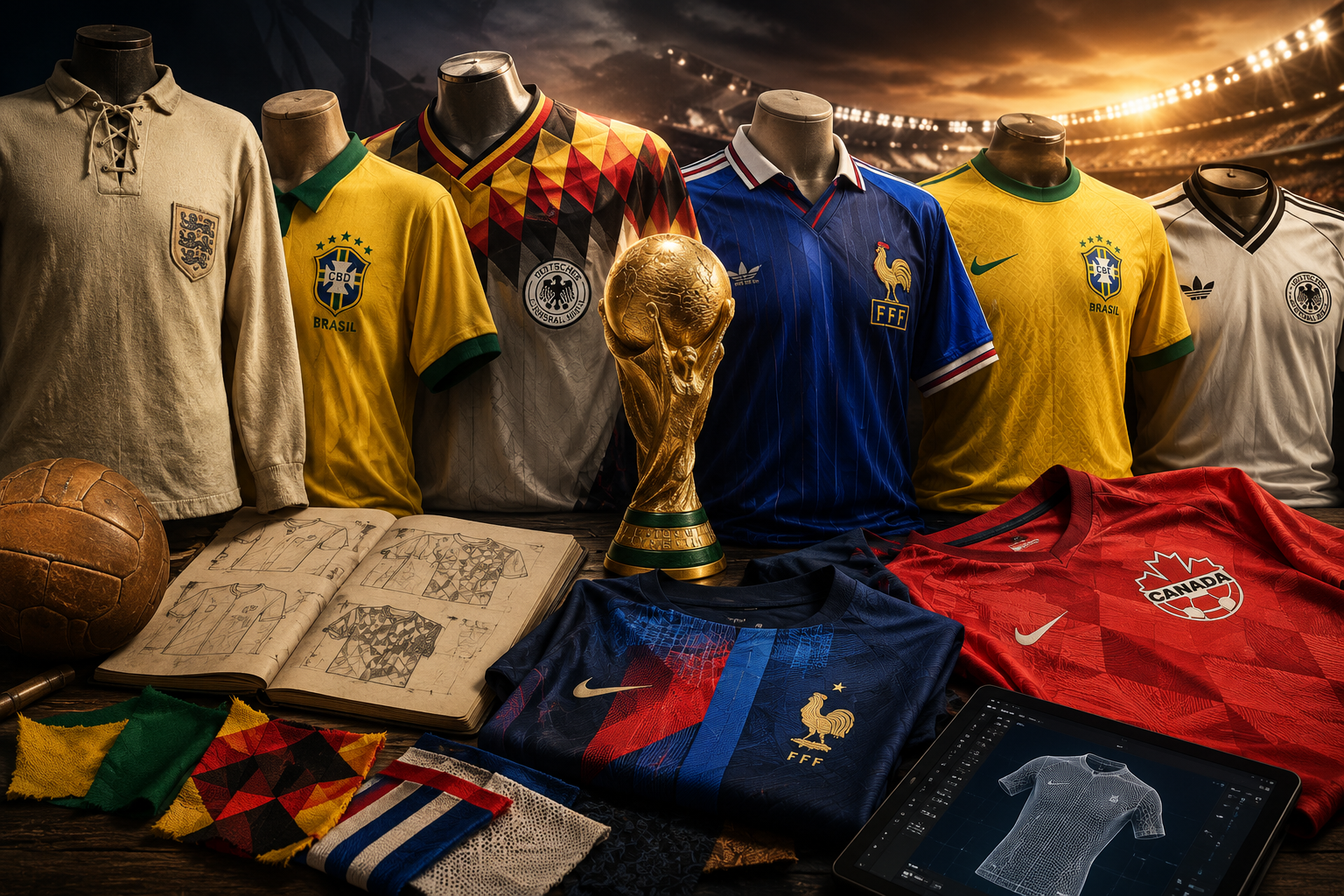
Before a single ball is kicked at the World Cup, a different kind of battle has already been won or lost, and it’s stitched into every seam of every shirt on the field.
What looks like just a jersey is actually the result of 1,400 days of obsessive design work, archaeological-level cultural research, and deals worth hundreds of millions of dollars. That canary yellow Brazil shirt? It was born from national heartbreak and designed by a Uruguayan fan, of all people. Germany’s iconic 1988 geometric kit? So good they wore it to win the World Cup two years later. And Nike’s entry into football? It cost them a then-record $100 million just to put their logo next to Brazil’s crest.
This video traces the full 96-year journey of World Cup kits from heavy wool sweaters worn in 1872, to cotton button-downs sourced from local department stores, all the way through to today’s AI-assisted, performance-engineered masterpieces that sell out in hours. You’ll learn why the 1990s were the golden age of bold, kaleidoscopic kit design, why the 2000s stripped everything back to near-minimalism (and why performance fabric was to blame), and why right now — heading into 2026 — designers finally don’t have to choose between looking good and playing well.
Featuring insights from former Nike designer Drake Ramberg, this is the story of how a piece of sportswear became a cultural artifact, a financial instrument, and a core memory all at once. France’s 2026 kit is a love letter to the Statue of Liberty. Germany’s 2026 kit is the last ever made by Adidas, marking the end of a 70-year partnership. And Canada’s kit? It’s the first uniquely designed World Cup kit in the country’s history.
Kit design isn’t just fashion. It’s history, identity, nostalgia, and legacy all compressed into 90 grams of fabric.
Watch the full breakdown here: