Imagine changing gears 3,200 times in a single race at 200 mph, with bleeding hands, one hand off the wheel, and one wrong move away from a career-ending crash. That was Formula 1 just 40 years ago. Today, the same gear shift happens in 3 milliseconds, and the driver barely notices it.
So what changed? Everything.
The story starts in the brutal manual era of the 1950s through ’80s, where drivers wrestled with an H-pattern gearbox mid-corner, stamping clutches and blipping throttles in a terrifying half-second ballet — lap after lap, for the entire race. It was so physically punishing that drivers had to tape their hands just to survive the distance.
Then came Ferrari. First, Mauro Forghieri quietly built a paddle-shift prototype in 1979 to combat turbo lag — only for Ferrari’s star driver to kill the project, convinced a steel lever would always beat electronics. A decade later, designer John Barnard brought it back, this time to make the car narrower and faster through the air. Nigel Mansell strapped in, convinced the thing would break before the finish line. It didn’t. He won.
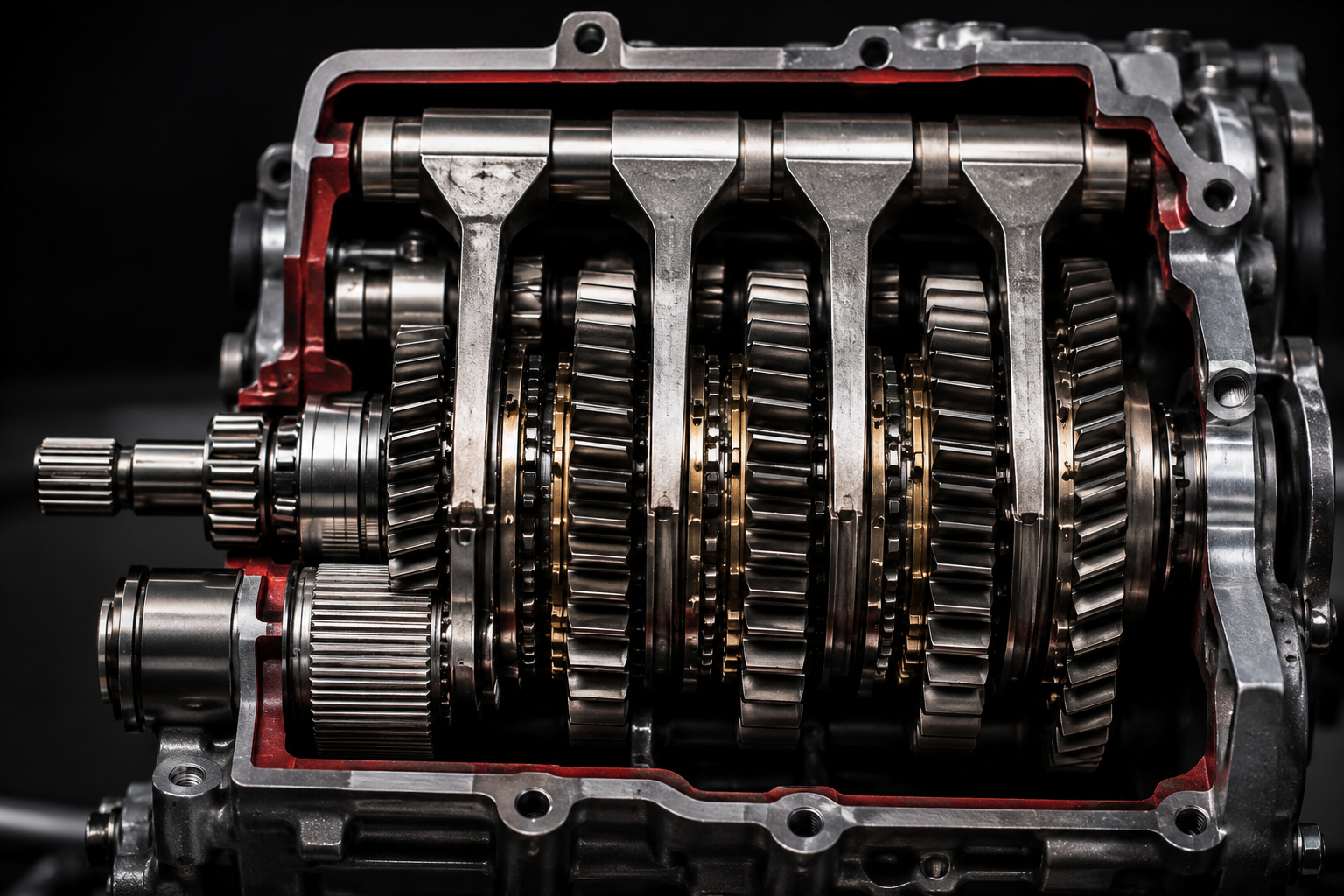
But winning wasn’t enough. Engineers spent the next two decades chasing a gear change with zero power cut. Seamless shifting is the kind of idea that sounds like it should destroy itself. For 2 to 4 milliseconds, two gears are engaged at the same time. By every law of mechanics, the gearbox should lock solid. It doesn’t, thanks to a brilliantly simple trick in the shape of the dog rings that forces the old gear to eject itself at exactly the right moment.
The result? A gear shift so fast, so seamless, it’s effectively invisible. One gearbox now lasts 10 races. The bleeding hands are gone. The broken engines are gone—forty years of engineering, distilled into 3 milliseconds.
Watch the full video to see exactly how it all works: